top of page


Species Spotlight: Philippine Duck
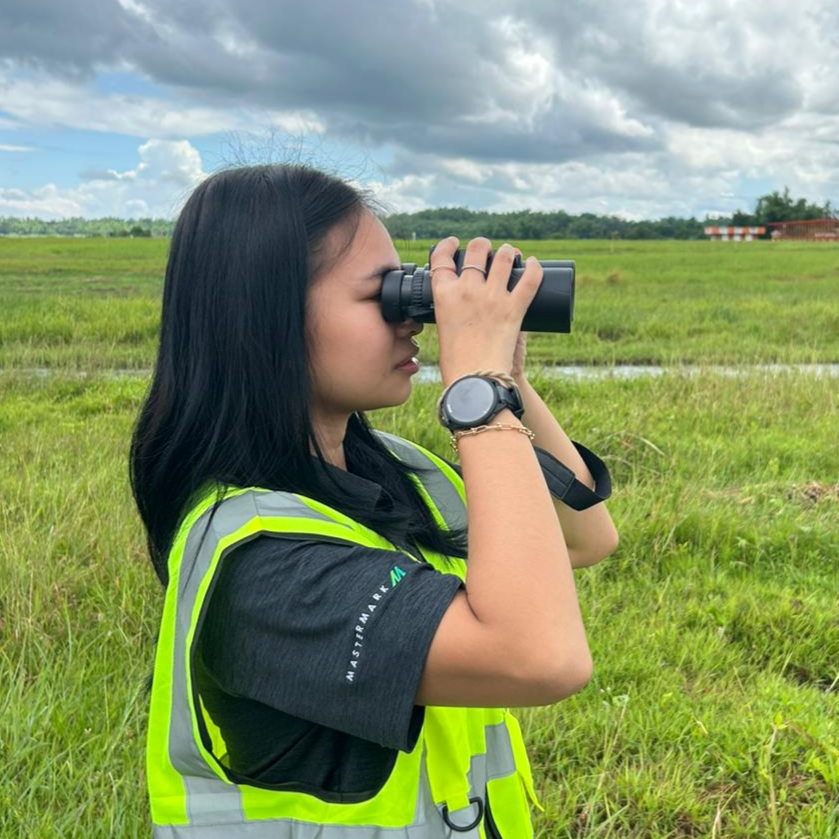
Philippine ducks can easily hide within airport grasses and canals. Ducks are among the most consequential species in aviation wildlife hazard management worldwide, precisely because of their size, their tendency to fly in tight flocks, and their affinity for the open, grassy, waterlogged terrain that airports so often provide. When it comes to ducks and aviation safety: mass, not size alone, drives risk, and a duck moving at speed in a multi-bird flock can be every bit as da
Patricia Tamin
3 min read


Why 13 Kilometres Is the Most Underrated Number in Aviation Safety
An example of a 13km radius from South Africa's OR Tambo International Airport (frontiersin.org, 2021). Ask most people where an airport's responsibility for wildlife begins and ends, and they'll point to the perimeter fence. That fence stops people. It does nothing to stop birds and other wildlife. Birds don't recognise property lines or the difference between "airside" and "somebody's golf course." What they recognise is food, water, shelter, and the absence of threats. An

Trang Ngo
3 min read


It Takes a Village to Keep Wildlife Off the Runway
It takes a village. The Mastermark Philippines team with some of the hardworking people who help make wildlife hazard management possible. Wildlife hazard management has a science problem, except the problem isn't the science. Habitat modification, dispersal tactics, deterrent technology: the field has gotten remarkably good at the technical side of keeping animals away from aircraft. What it hasn't solved, is the human side. Because no amount of grass-cutting or bird cannon
Patricia Tamin
5 min read


Adapting to the Terrain: Wild Boar in Hong Kong
The Mastermark team setting up a Pig Brig trap with the AFCD of Hong Kong team. Airport wildlife hazard management is often thought of as a bird problem, but the risks on the ground can be just as significant. Wild boars are large, unpredictable, and capable of causing serious damage to aircraft, vehicles, and infrastructure, making them a growing concern for airport operators managing wildlife strikes and incursions. Mastermark is the Asian distributor for Pig Brig, widely r

Kai Ren Tan
4 min read


Why CAAs Must Work with Airports on Wildlife Hazards
Defining Operators & Regulations When referring to “operators” in the context of wildlife hazard management (WHM) at airports, who...
Nick Yearwood
4 min read


Avian Arrivals: How Singapore's Asian Openbill Surge Challenges Airports
Asian openbill (Sam Lievense). The Asian openbill (Anastomus oscitans), a large stork species, has recently become a more frequent...

Sam Lievense
4 min read


Australian Aviation Wildlife Hazard Group Forum 2024
In August, the Mastermark team traveled to Melbourne to attend the Australian Aviation Wildlife Hazard Group (AAWHG) Forum, an event...

Debra Yap
3 min read


North America Aviation Wildlife Management Conference 2024
Every couple of years, we get the opportunity to fly stateside, and this year brought us to Minneapolis to attend the Aviation Wildlife...

Logan Tan
3 min read


Unexpected Wildlife Strikes: Beyond Birds in Aviation
We commonly associate birds with wildlife strikes involving aircraft. However, strikes can and do involve a wider variety of wildlife....
Sam Lievense
4 min read


Airport Technology Tools: Scarecrow Group's Bio-Acoustic Bird Control Devices
Given the danger bird strikes at airports can pose to both planes and human life, a comprehensive risk mitigation toolkit is paramount....
Matthew Scott
4 min read
bottom of page